

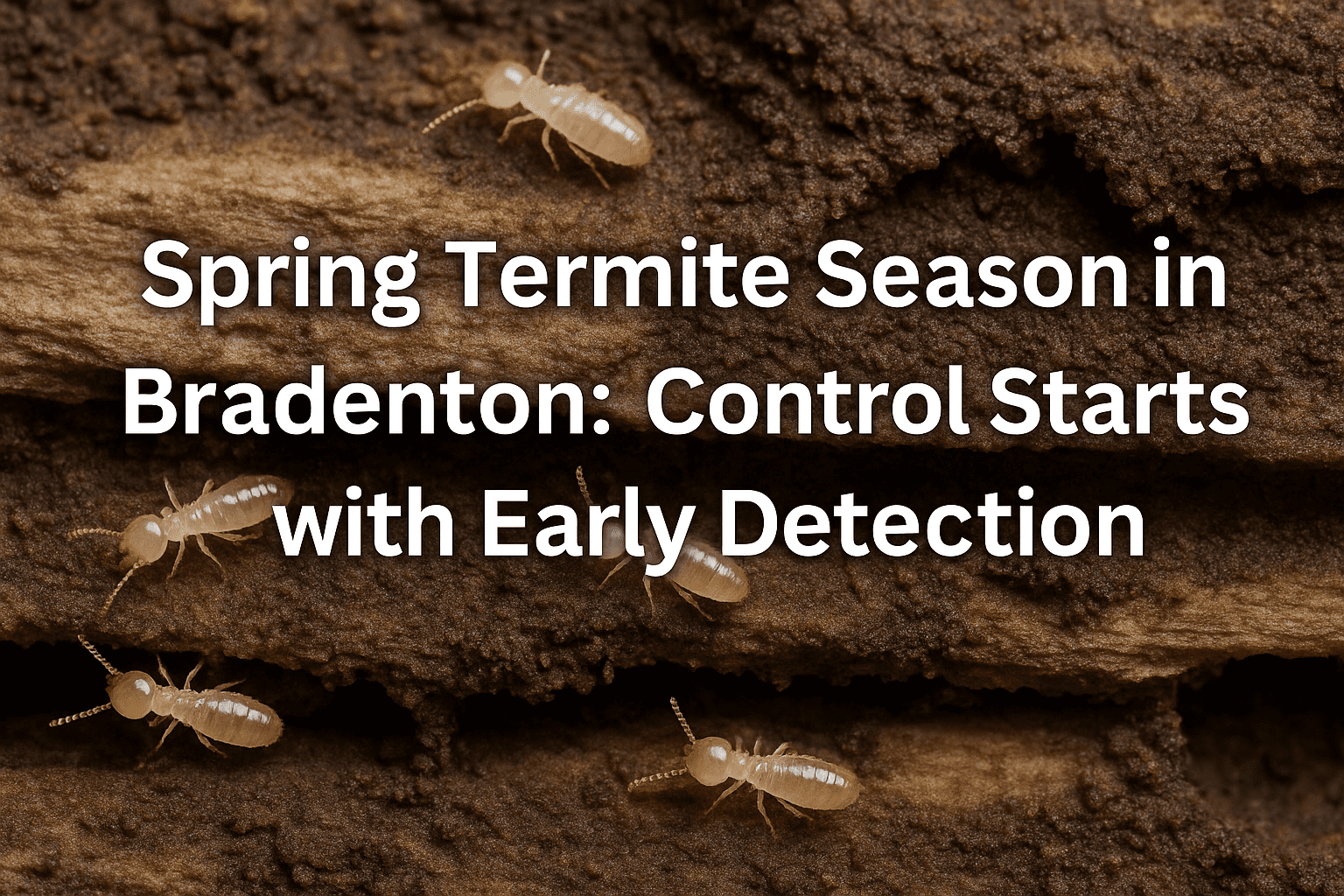
Spring Termite Season in Bradenton:
Early Detection and Professional Termite Control Save Thousands
When spring arrives in Bradenton, homeowners face an unwelcome reality alongside blooming gardens and warmer weather—peak termite season. With Florida’s year-round termite activity intensifying in the spring, Bradenton termite control becomes a critical priority for protecting your home investment.
For families, retirees, and property managers throughout Sarasota County, understanding the science behind spring termite behavior could mean the difference between a routine inspection and catastrophic structural damage that could cost thousands of dollars.
Why Spring Creates Perfect Storm Conditions for Bradenton Termite Control
Florida’s subtropical climate eliminates the natural pest control that freezing temperatures provide in northern states. Instead, our region experiences what pest control professionals call “continuous pressure seasons”—periods where termite colonies remain active and reproductive year-round.
Industry data reveals alarming trends:
- Florida leads the nation in termite damage claims, with over 32% of all U.S. termite-related insurance disputes
- Coastal Florida counties, including Manatee County, report 40% higher termite activity than inland areas
- Spring months show a 65% increase in new colony establishment compared to winter periods
The combination of rising temperatures (75-85°F optimal range) and increased rainfall creates ideal swarming conditions. Here’s what makes Bradenton particularly vulnerable:
Environmental Risk Factors:
- Gulf moisture: Consistent 70-80% humidity from coastal proximity
- Sandy soil composition: Allows easy termite tunnel construction
- Abundant cellulose: Year-round vegetation and wooden construction materials
- Minimal temperature fluctuation: Prevents natural colony die-offs
These conditions explain why termite inspection Florida standards recommend more frequent monitoring in coastal areas compared to national averages.
Recognizing Spring Termite Swarms: Expert Identification Guide
Understanding spring termite swarms requires recognizing both the timing and physical characteristics of reproductive flights. According to entomological research from the University of Florida, termite swarms follow predictable patterns that homeowners can learn to identify.
Swarming Triggers:
- Temperature increase to 70°F or higher
- Barometric pressure drop (typically before rain)
- High humidity levels (above 70%)
- Calm wind conditions
Visual Identification Checklist:
- Wing appearance: Four wings of equal size and length
- Antennae shape: Straight (not elbowed like ants)
- Body structure: Thick waist connecting thorax and abdomen
- Color variations: Light brown to black depending on species
- Size range: 1/4 to 1/2 inch including wings
Critical Warning Signs:
- Discarded wings near light sources, windows, or doors
- Small piles of wood-colored pellets (frass)
- Mud tubes along foundation walls
- Hollow-sounding wood when tapped
- Unexplained moisture damage or soft spots
The key difference between termite swarmers and flying ants lies in wing proportion and antennae shape—a distinction that could save thousands in damage costs.
The Financial Reality: What Termite Damage Actually Costs Bradenton Homeowners
Recent insurance industry data paints a sobering picture of termite damage economics. The National Pest Management Association reports that termites cause over $5 billion in annual property damage nationwide, with Florida accounting for nearly 20% of that total.
Bradenton-Specific Cost Analysis: Spring Termite Season in Bradenton
- Minor infestations: $1,500 – $3,000 in treatment and repairs
- Moderate damage: $4,000 – $8,000 for structural repairs
- Severe infestations: $10,000 – $25,000+ for extensive reconstruction
- Total home loss: Rare but documented cases exceeding $50,000
Insurance Reality Check:
- 95% of homeowner policies exclude termite damage
- Considered a “preventable maintenance issue” by most insurers
- Property values can drop 10-25% with a documented termite history
- Disclosure requirements vary by state but trend toward mandatory reporting
Consider this real-world example: A Lakewood Ranch property manager discovered subterranean termite activity during a routine inspection. Early intervention cost $1,200 for professional treatment. Six months later, a neighboring property with similar construction required $12,000 in structural repairs after delaying treatment.
Professional termite prevention through regular inspection costs roughly $200-400 annually—a fraction of potential repair expenses.
Understanding Bradenton’s Year-Round Termite Threat
Unlike seasonal pest problems, Florida’s termite species maintain continuous activity levels that intensify during favorable conditions. Research from the Florida Department of Agriculture identifies five primary termite species in our region, each with distinct behavioral patterns.
Local Species Profile:
Subterranean Termites (85% of local infestations):
- Build mud tubes for moisture protection
- Require soil contact for survival
- Most destructive to structural wood
- Peak activity: March through October
Drywood Termites (12% of local infestations):
- Live entirely within wood structures
- No soil contact required
- Create distinctive pellet droppings
- Active year-round with spring peaks
Bradenton’s coastal environment creates additional risk factors that inland areas don’t face, including moisture amplification from Gulf breezes that maintain 70-80% humidity year-round, and salt air that accelerates wood weathering and creates entry points.
Professional Termite Inspection: Beyond What Homeowners Can See
While homeowners can identify obvious signs like swarmers or mud tubes, comprehensive termite inspection Florida protocols reveal hidden activity that untrained observation misses entirely.
Industry-Standard Inspection Process:
Phase 1: Exterior Assessment
- Foundation perimeter examination (every 6 inches)
- Moisture meter readings at ground level
- Structural wood probing with specialized tools
- Landscape evaluation for conducive conditions
Phase 2: Interior Investigation
- Crawl space and basement thorough inspection
- Attic examination for drywood termite evidence
- Plumbing penetration assessment
- Electrical and HVAC entry point evaluation
Phase 3: Advanced Detection Methods
- Thermal imaging to identify temperature variations
- Acoustic detection equipment for colony sounds
- Moisture mapping to predict future risk areas
- Digital documentation with photographic evidence
The average professional inspection takes 2-3 hours and covers areas homeowners typically can’t access safely or effectively evaluate.
Comprehensive Termite Prevention: Evidence-Based Strategies
Effective termite prevention combines environmental modification with ongoing professional monitoring. Research from Auburn University and the University of Florida provides clear guidance on prevention effectiveness.
Tier 1: Environmental Modifications (40-60% risk reduction)
Moisture Management:
- Maintain ground drainage away from the foundation
- Repair plumbing leaks within 24 hours
- Use dehumidifiers to maintain below 50% interior humidity
- Clean gutters monthly to prevent overflow
Physical Barriers:
- Remove wood-to-soil contact points
- Install metal or concrete barriers between wood and ground
- Store firewood 20+ feet from structures
- Maintain 6-inch clearance between mulch and foundation
Tier 2: Chemical Barriers (70-90% effectiveness)
- Soil treatment around the foundation perimeter
- Bait station monitoring systems
- Wood treatment for high-risk areas
- Regular reapplication following manufacturer schedules
Tier 3: Professional Monitoring (95%+ effectiveness)
- Annual comprehensive inspections
- Quarterly monitoring visits
- Immediate response protocols for activity detection
- Documentation for insurance and resale purposes
When Professional Intervention Becomes Critical
Recognizing the transition from prevention to active treatment requires understanding escalation patterns. Pest management professionals use specific criteria to determine intervention urgency.
Immediate Action Required:
- Live swarmers inside the home: Indicates established colony proximity
- Fresh mud tubes: New construction within 30 days
- Structural damage discovery: Requires an immediate assessment scope
- Multiple activity locations: Suggests advanced infestation
Emergency response protocols should include professional assessment before attempting DIY treatments, which often mask symptoms without addressing root colonies.
Your Next Steps: Protecting Your Bradenton Investment
Spring termite season in Bradenton demands proactive protection rather than reactive damage control. With Florida’s continuous termite pressure and our coastal risk factors, waiting for visible damage puts your property investment in serious jeopardy.
Immediate Action Plan:
- Schedule Professional Assessment: Comprehensive inspection identifies current risk levels and establishes baseline documentation
- Implement Environmental Controls: Address moisture issues and eliminate wood-to-soil contact points
- Establish Monitoring Protocol: Regular professional evaluation prevents small problems from becoming major expenses
- Document Everything: Maintain records for insurance purposes and property value protection
The investment in professional Bradenton termite control services pays dividends through prevented damage, maintained property values, and peace of mind during peak termite seasons.
Don’t gamble with your home’s structural integrity. Early detection and professional intervention save thousands in repair costs while protecting your family’s most significant investment.
Contact qualified termite control professionals today to schedule your comprehensive property assessment. Your home’s protection starts with understanding the threat—and continues with professional expertise you can trust.
Before choosing a termite company, read our comparison of Bradenton pest control companies so you know exactly what to expect.

